
Blending gets most of the attention in phonics because it's the skill that unlocks reading. But there's a mirror skill that unlocks spelling, and it's just as essential: segmenting. Here's what it is, why it matters, and a simple step-by-step way to teach it.
What segmenting actually is
Segmenting means breaking a spoken word into its separate sounds, one at a time: "dog" becomes /d/ /o/ /g/. It's the exact reverse of blending, which pushes separate sounds back together into a word. Where blending is the engine behind reading, segmenting is the engine behind spelling — to write a word, a child first has to hear which sounds are in it and in what order.
Why it gets skipped
Most phonics lessons are built around reading first, so blending naturally gets more practice time. Segmenting is often introduced as an afterthought — "now spell it" — without the same step-by-step support blending gets. That gap shows up later as a child who reads reasonably well but spells inconsistently, because segmenting was never drilled as its own skill.
How to teach it, step by step
- Start with syllables, not individual sounds. Clap out "but-ter-fly" before asking a child to segment single phonemes. Chunking into syllables first builds the underlying skill of slowing speech down deliberately.
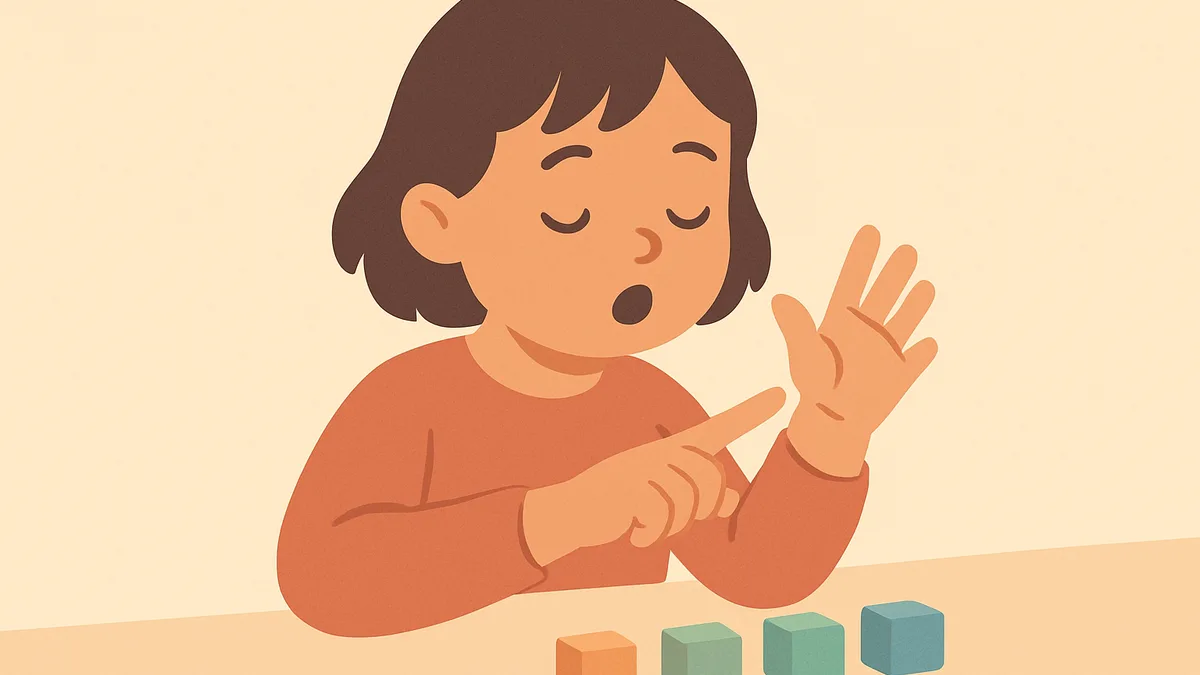
- Give every sound a physical anchor. Tap a finger, move a counter, or use "robot arms" (touching shoulder, elbow, wrist for a 3-sound word) for each phoneme. The physical action gives the ear something concrete to track.
- Begin with 2-sound words before 3. Words like "up," "in," and "at" are easier starting points than "cat" or "dog." Add a third sound only once two-sound segmenting feels automatic.
- Always say the whole word first. Say "dog" normally, then segment it: "d... o... g." Segmenting cold, without hearing the target word first, is much harder for a beginner.
- Move from spoken sounds to written letters. Once a child can segment a word aloud reliably, have them write a letter for each tapped sound. This is the exact bridge from segmenting into real spelling.
The "robot voice" trick
Ask your child to say a word "like a robot" — stretched out into separate sounds instead of one smooth word. Most kids find this genuinely fun, and it does the segmenting work without feeling like a drill.
Segmenting and blending are best practiced together, not one after the other for weeks at a time. Our guide to teaching blending covers the reading side in the same step-by-step format. And if you're still deciding which letter sounds to introduce first, see our phonics teaching order guide.
Free printable for this topic
Download the Blending Practice Worksheet — a free PDF you can print and use today.