
This is one of the most confusing stages for parents: your child can say every letter sound on flashcards without hesitation, but sit them in front of the word "cat" and they stare blankly, or say "c... a... t..." and never arrive at the word. It feels like it should just click. Here's why it doesn't yet, and what actually bridges the gap.
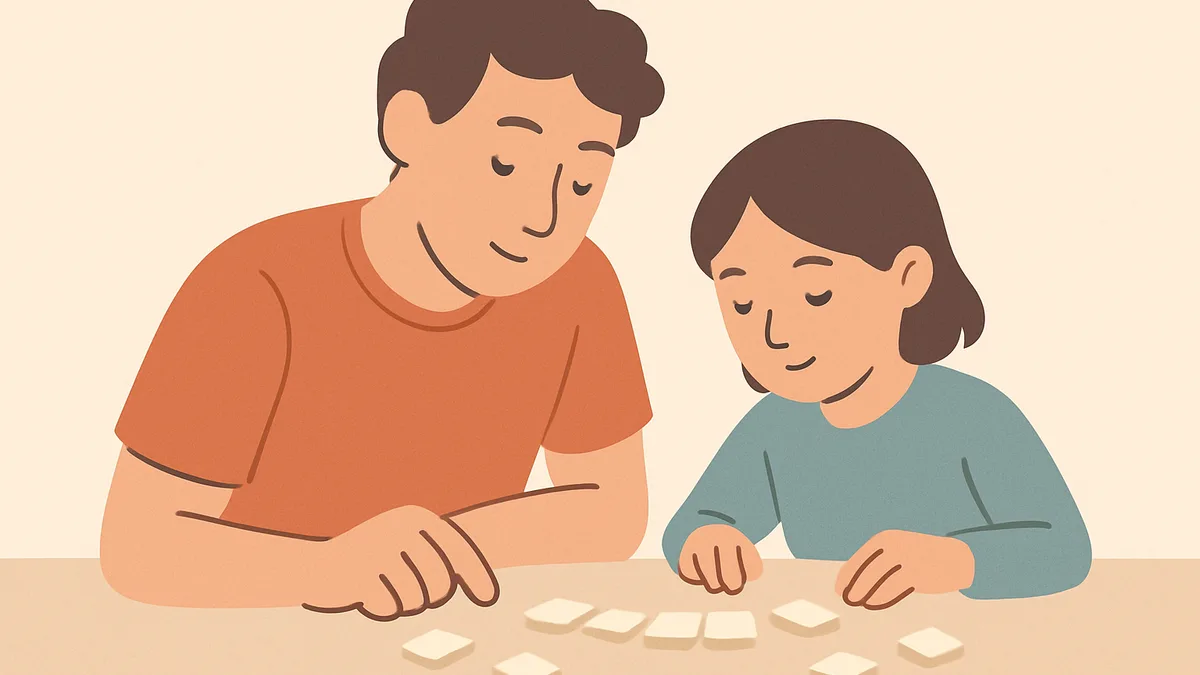
Knowing sounds and blending them are different skills
Recalling that "c" says /k/ is a memory task — matching a shape to a sound. Blending is a working-memory task: holding three separate sounds in mind, in order, and merging them into one continuous word before they fade. A child can be excellent at the first and still need dedicated practice at the second — they're genuinely different mental operations, and most phonics programs move from one to the other faster than some children are ready for.
The usual culprits
- Jumping straight to written blending. Blending letters off a page adds a decoding load on top of the merging task itself — oral-only blending first removes that extra difficulty.
- Sounds said too slowly or too separated. A long pause between "c...a...t" makes the sounds too hard to hold together in memory; the gap between sounds needs to be short.
- Starting with words that are too long. Three-sound words (cat, sun, mop) build the skill; four- and five-sound words too early just cause it to break down.
- Not enough repeated, short practice. Blending is a skill that firms up with frequent brief sessions, not occasional long ones.
How to bridge it
- Start oral-only, no letters at all. Say "m... a... t" out loud yourself and ask, "what word is that?" Once your child can do this reliably with sounds you say, move to sounds they read.
- Keep the sound gap tight. Sounds should flow close together, almost overlapping, not sit as three isolated beats.
- Use your hand or a sweeping gesture under the word. A physical left-to-right sweep as you say the sounds helps some children feel the merging happen, not just hear it.
- Stick to three-sound words until blending is automatic. Cat, dog, sun, pig, hat, mop — only add a fourth sound once these are easy and fast.
A simple daily drill that builds the skill
This takes about five minutes and works well right before or after a regular phonics session. Say three sounds slowly and clearly, with the gap between them tight rather than drawn out, and ask your child what word it makes. Start entirely with your voice — no letters at all — for the first few days.
Once your child reliably blends sounds you say aloud, switch to sounds they read off letter tiles or a whiteboard, using this same short word list first before moving to unfamiliar ones. The transfer from oral to written blending usually happens faster than the original oral blending skill did.
Give it real time before worrying
A stretch of knowing sounds but not blending them is one of the most universal stages in learning to read — it is not, by itself, a sign of anything unusual. If it hasn't budged after several weeks of short, consistent, correctly-paced practice, our guide for struggling readers covers the next steps to check.
If blending clicks but your child then guesses at words from pictures or first letters instead of sounding them fully, see our post on guessing instead of reading. And if this stage is dragging on well beyond what feels reasonable, our phonics isn't working guide is a good next stop.
Free printable for this topic
Download the Blending Practice Worksheet — a free PDF you can print and use today.