Phonics blog

Scarborough's Reading Rope, Explained for Parents

Skilled reading is woven from two strands — word recognition and language comprehension — each built from sub-skills that take years, not months.

7 min read

Reading researcher Hollis Scarborough pictured skilled reading as a rope — many separate strands, each strengthening over years, twisting together into one strong cord. It's one of the most useful mental models for understanding why reading involves so much more than phonics alone.
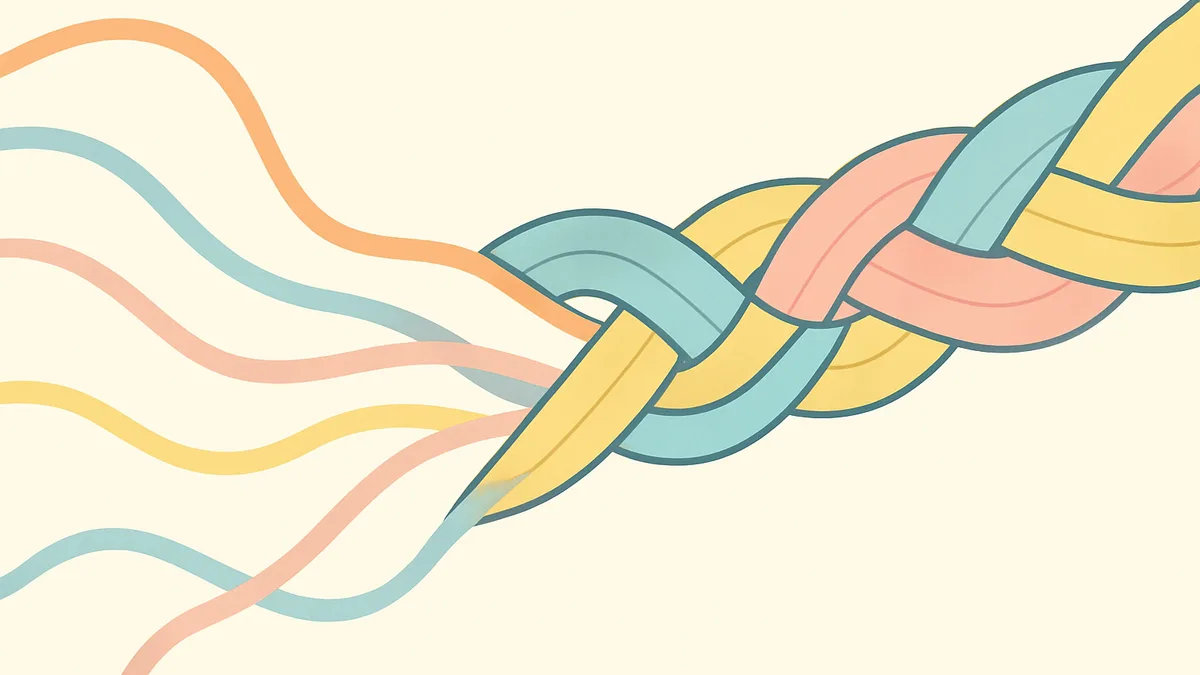
Several colourful thread-like strands twisting together into one strong braided rope

Strand 1: Word recognition (becomes automatic)

Word recognition strands
Becomes increasingly automatic with practice
phonological awarenessdecodingsight recognition of familiar words

This is the strand phonics instruction builds most directly — see our phonological awareness activities and orthographic mapping explanation for how these specific pieces develop.

Strand 2: Language comprehension (becomes increasingly strategic)

Language comprehension strands
Becomes increasingly strategic, not just automatic
background knowledgevocabularylanguage structuresverbal reasoningliteracy knowledge

Why both strands need attention

A child can be strong in every word-recognition strand and still struggle with reading comprehension if the language-comprehension strands are thin — this is exactly the profile explained by the Simple View of Reading (decoding × comprehension).

What this means practically at home

Keep both strands active: phonics practice for word recognition, plus read-alouds, conversation, and exposure to new vocabulary and ideas for language comprehension. Neither strand alone builds a strong reader — the rope needs every strand contributing.

Not sure where to start?

Build a free personalised phonics practice plan for your child — pick a start date and pace, we schedule the rest.

Frequently asked questions

What is Scarborough's Reading Rope?+
A model developed by researcher Hollis Scarborough showing skilled reading as a rope woven from many strands, grouped into two main bundles: word recognition and language comprehension. Both bundles need to strengthen and become more automatic over time.
What's in the word recognition strand?+
Phonological awareness, decoding, and sight recognition of familiar words — the strand phonics instruction builds most directly, becoming increasingly automatic with practice.
What's in the language comprehension strand?+
Background knowledge, vocabulary, knowledge of language structures, verbal reasoning, and literacy knowledge — this strand becomes increasingly strategic, not just automatic, as a reader matures.
Why is this a rope rather than a checklist?+
Because the strands are meant to be interwoven and mutually reinforcing, not developed and checked off one at a time — weakness in any strand can still show up as a reading difficulty even if the others are strong.

Turn this into a dated schedule

Pick a start date and a pace, and get all 43 sounds laid out as dated sessions — free to preview, downloadable as a calendar.

Build your plan →

Related posts

Get the app

Get the full app — 15 phonics games, 43 native sounds

Free on iPhone, iPad, and Android. Works offline. No ads, no surprise paywalls.

ABC Phonics — Sounds for Kids