
There's no single right answer to how long a phonics lesson should be — it depends heavily on age and on the individual child that day. Here's a general guide by age, plus the specific signs that mean it's time to stop, regardless of the clock.
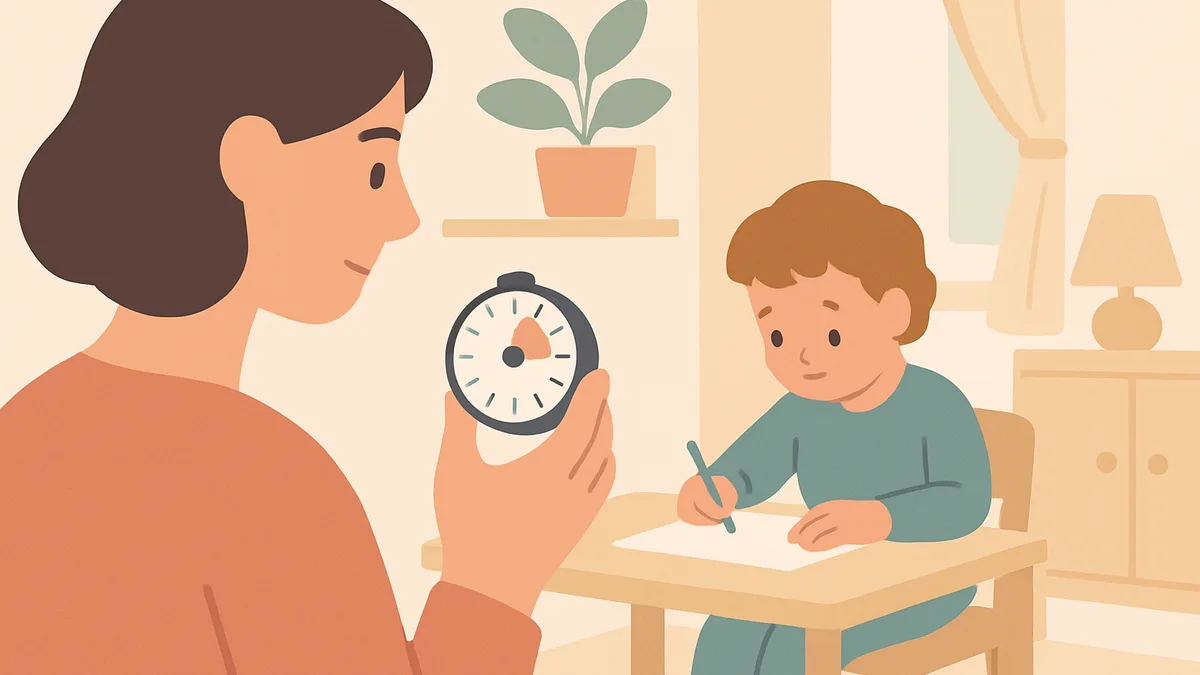
Session length by age
| Age | Suggested length | Notes |
|---|---|---|
| 3-4 years | 5-10 minutes | Split into two short bursts across the day if focus fades fast. |
| 5 years (kindergarten) | 10-15 minutes | Usually manageable in one sitting with a short break in the middle. |
| 6-7 years | 15-25 minutes | Stamina is building; extend gradually rather than jumping straight to the top of the range. |
| 8+ years | 20-30 minutes | Closer to a typical short lesson block, often with more independent reading built in. |
Signs your child has hit their ceiling for the day
- Fidgeting or silliness noticeably increasing. A sudden shift into wiggling, giggling, or off-topic chatter is often the first real signal, well before your child says anything.
- Guessing instead of sounding out. If a child who was carefully decoding five minutes ago starts blurting random answers, that's fatigue, not a skill gap.
- Correct answers dropping off suddenly. A sharp dip after a stretch of solid answers usually means attention has run out, not that the material got harder.
- Repeatedly asking if you're done. Worth taking at face value rather than pushing for "just one more" — a lesson that ends on request tends to go better tomorrow.
Stop on a win, not on the clock
If you notice any of the signs above, wrap up on the next correct answer rather than pushing to a round number of minutes. Ending on success matters more for tomorrow's motivation than squeezing out one more word.
Growing session length over time
The table above is a starting ceiling, not a fixed target — most children can gradually handle longer sessions as reading becomes more automatic and less effortful. A useful rule of thumb: once a child is reliably reaching the top of their age range's suggested time without showing the fatigue signs below, add another five minutes for a week or two and see how it goes. If fidgeting or guessing creeps back in at the new length, step back down — session length should track a child's actual stamina that month, not a number from a chart.
Session length naturally shifts as a child moves through the broader stages of learning to read — see our full breakdown of phonics stages by age for what typically comes next after the basics. And if you haven't settled on a teaching sequence yet, our phonics teaching order guide is a good starting point.
Not sure where to start?
Build a free personalised phonics practice plan for your child — pick a start date and pace, we schedule the rest.