
One letter, two sounds, and one clean rule that predicts almost every case: C says soft /s/ before e, i, or y — and hard /k/ everywhere else. Here's the full rule with word lists, the rare exceptions, and a mnemonic that actually sticks.
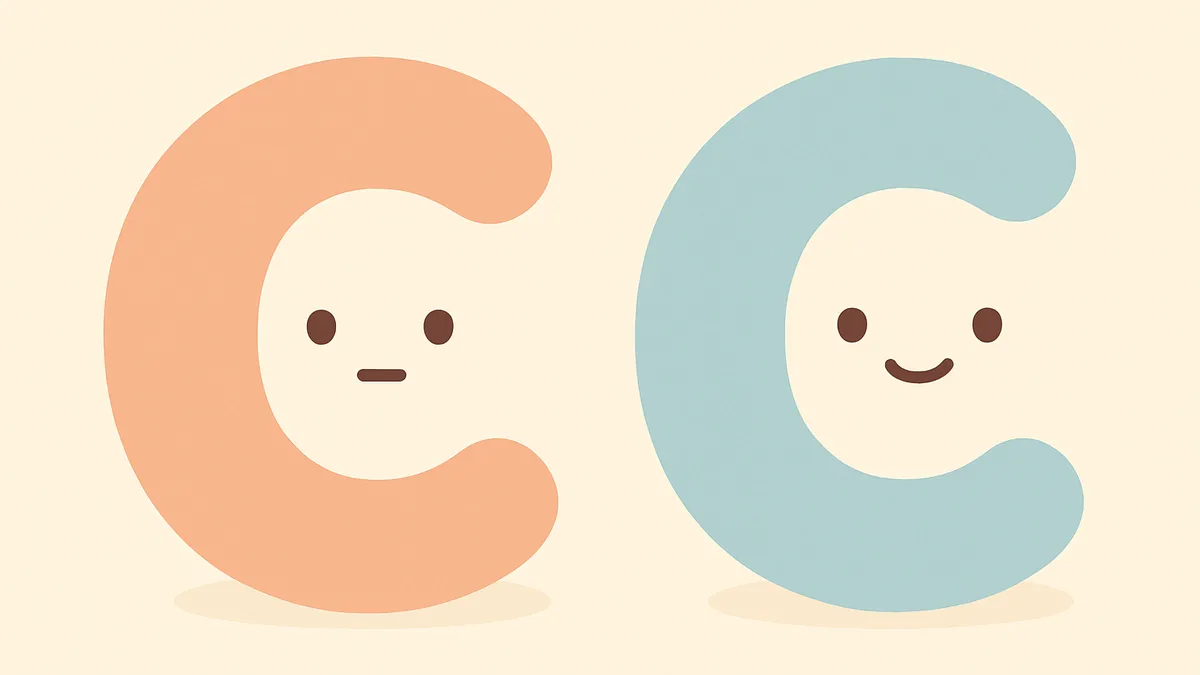
The rule in one sentence
If C is followed by e, i, or y, it says soft /s/. In every other position — before a, o, u, a consonant, or at the end of a word — it says hard /k/.
Rare exceptions
A tiny handful of words break the rule
"Soccer" and "Celtic" both keep a hard C before e/i, mostly because they're borrowed words that didn't fully adapt to English spelling patterns. These are rare enough to teach as one-off exceptions once the main rule is secure — don't lead with them.
A mnemonic that sticks
"E, I, and Y make C say /s/" — say it as a short chant, and have your child physically point at the letter right after the C each time they read a C-word. The pointing habit builds the pattern-recognition faster than the verbal rule alone.
G follows a very similar pattern — see our hard G and soft G rule next. Both fit into the broader set of spelling rules covered in our 10 English spelling rules guide.
Free printable for this rule
Download the Apply the Rule worksheet — Rule 5 (Soft C) is a ready-to-print practice page, part of a free PDF covering all 10 spelling rules.
Not sure where to start?
Build a free personalized phonics practice plan for your child — pick a start date and pace, we schedule the rest.