
"Is my child behind?" is one of the most common worries parents bring to phonics — and it's usually answerable with a short, specific check rather than guesswork. Here's a 10-minute version you can run at home.
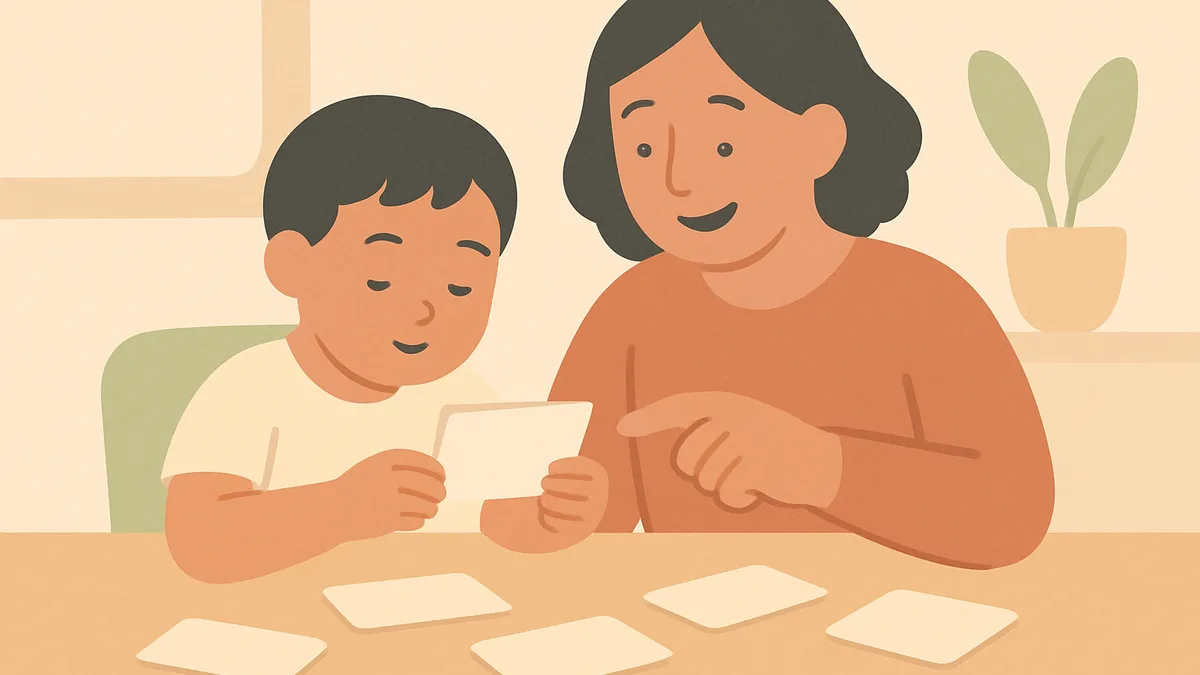
The 10-minute home check
- Letter sounds (2-3 min). Show 10-15 mixed letters and ask for the sound, not the name. Instant, confident answers are the goal — long pauses or guessing point to a gap here.
- Blending (3-4 min). Write 5-6 simple words matched to your child's age (CVC words for younger children, digraphs/blends/vowel teams for older ones) and have them read each aloud without help.
- A short passage (3-4 min). Pick a short, age-appropriate decodable or early reader passage and listen for accuracy, hesitation, and whether they can retell what happened.
Comparing results to what's typical
Compare what you saw to typical expectations for your child's age using our phonics milestones by age chart. One weak spot on an off day isn't a red flag — normal variation is wide, especially before age 6-7. What's worth acting on is a pattern: multiple skills below age expectation at once, or a gap that isn't closing over a few months.
This is a screen, not a diagnosis
This check is meant to tell you whether a closer look is warranted — it isn't a formal assessment and can't rule in or out things like dyslexia on its own. If results are concerning, our guide for struggling readers covers next steps in more depth.
If the check shows a real gap
- Start at the earliest weak point. Skills build on each other — fixing the first gap often resolves symptoms that show up later in the chain.
- Keep sessions short and consistent. A few focused minutes most days beats one long session a week.
- Re-check in a month, not daily. Progress shows up over weeks; testing too often mostly adds pressure.
When a bad check result doesn't mean what it looks like
A single check can sometimes make things look worse than they are, and it's worth ruling out a few common confounds before treating the result as reliable. A child who's tired, hungry, or checked right after a long day at school may perform noticeably below their actual level — if something felt off during the check, it's worth trying again on a fresh, calm day before drawing conclusions. Format matters too: a child who's used to phonics practice through games or an app might freeze up when suddenly handed a plain list of letters and asked to perform on demand, which is a testing-format effect more than a skill gap. Being watched and evaluated can also make some children anxious in a way that doesn't show up during normal, low-pressure practice — if your child seemed nervous rather than genuinely stuck, that's worth noting separately from an actual skill gap. None of this means skip the check; it means treat one rough result as a data point to confirm, not a verdict to act on immediately. If a second, calmer attempt on a different day produces a similar pattern, that consistency is what makes the result worth acting on — a one-off rough afternoon usually isn't.
For the full age-by-age picture, see our phonics stages by age guide.
Not sure where to start?
Build a free personalised phonics practice plan for your child — pick a start date and pace, we schedule the rest.