
Phonics apps are genuinely useful — instant feedback, self-paced levels, and a format kids often enjoy on their own. The goal isn't to avoid them, it's to make sure they're one part of practice rather than the whole thing. Here's a practical way to think about the split, without turning it into a guilt trip.
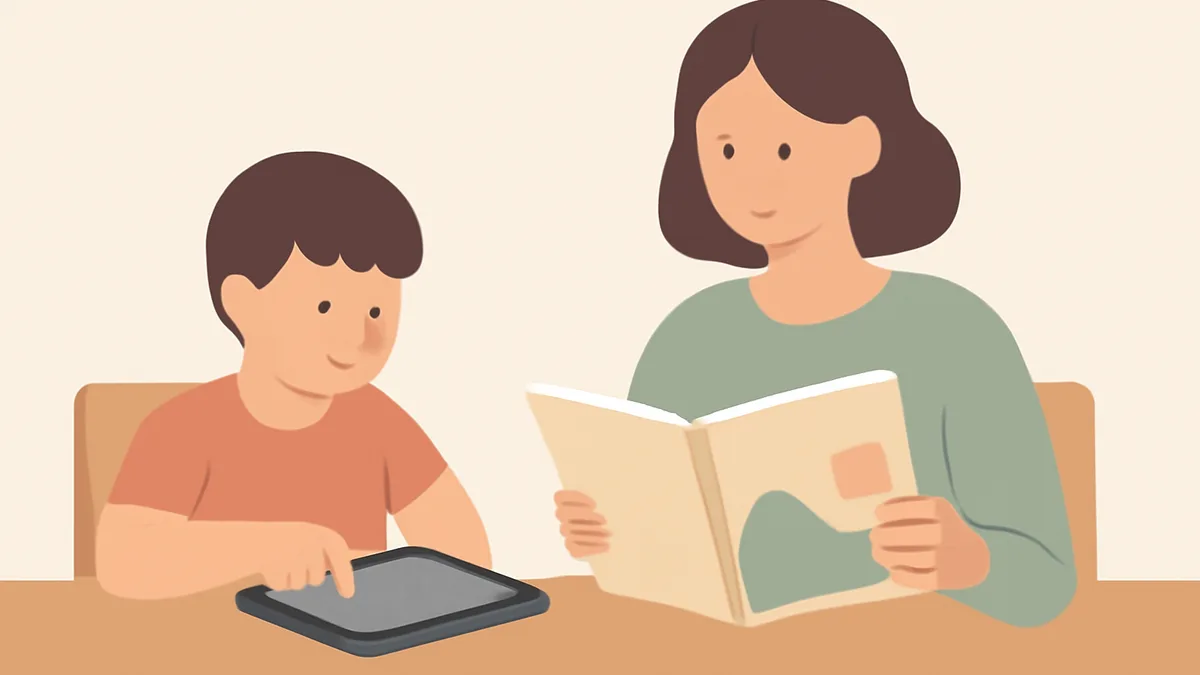
A practical starting split
- Roughly half and half, as a starting point. Around 10-15 minutes of app-based practice plus 10-15 minutes of screen-free practice most days covers most kids — treat it as a rough guide to adjust, not a strict rule.
- Let the app handle repetition, let you handle real reading. Apps are great at drilling the same sound pattern dozens of times without either of you getting bored. Save your one-on-one time for reading real sentences and books together, which apps can't fully replace.
- Use the app as a warm-up, not the whole session. A 5-minute app round before a screen-free activity can actually improve focus for what follows, similar to how our 5-minute phonics routine works as a short warm-up before other practice.
- Watch which format your child avoids. If a child eagerly reaches for the app but resists any paper or verbal practice, that's worth noticing — it may mean the on-screen rewards have become the main motivator rather than the reading itself.
- Check that skills transfer off-screen. Every couple of weeks, ask your child to read the same word or sound pattern printed on paper that they've been practicing in the app. If it doesn't transfer, that's a sign to add more screen-free reps of that specific pattern.
- Set a visible end point before the app session starts. Use a kitchen timer or the app's own timer, and say the limit out loud before handing over the device — "10 minutes, then we read a book together" — so the transition isn't a surprise negotiation once the time is up.
- Sit with your child during at least part of the app session. A few minutes of watching and narrating what they're doing ("oh, you got that /sh/ sound!") turns passive screen time into something closer to shared practice, and gives you a natural window to spot which sounds are still shaky.
- Keep the app tied to the same time slot each day. A predictable slot — right after breakfast, or right before the screen-free activity — removes the daily negotiation over when or whether the app happens, which tends to reduce meltdowns around starting and stopping.
Signs it's time to shift the balance
A meltdown when the app is turned off, expecting a game or animation to stay motivated for any reading task, or reading levels in-app that don't match reading levels on paper are all reasonable cues to dial screen time back and add one more screen-free activity per day.
For screen-free options to fill that other half of practice, see our full phonics games at home list, or build a short daily anchor with our home reading session routine guide.